
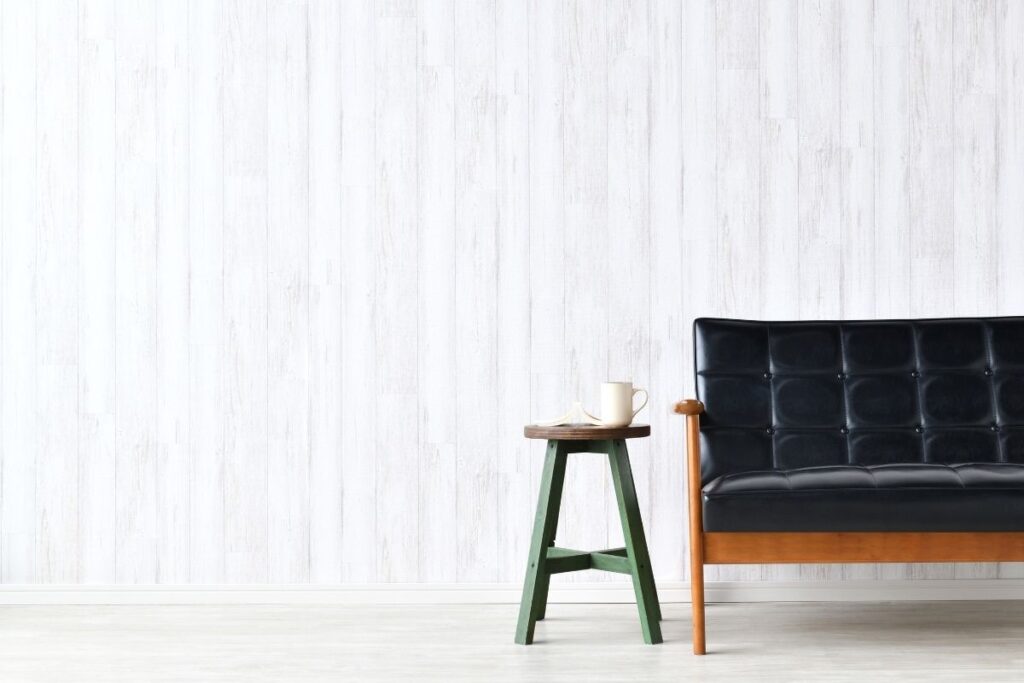
That empty spot beside your couch is asking for more than a stack of magazines and a half-empty water glass. An end table fills that gap, and building your own means you get to decide exactly what it does for you, not just what it looks like.
Some people want extra storage tucked into that space. Others want somewhere to charge a phone without a mess of cords, or a small footprint that won’t crowd a tight room. This roundup organizes DIY end table ideas around exactly those needs, so you can pick a project based on what you’ll actually use it for.
Storage-Focused End Table Ideas

If your living room tends to collect remotes, chargers, and stray clutter, an end table with built-in storage solves that problem without adding another basket to the room. These ideas prioritize function without sacrificing a clean look.
Drawer End Table
A single drawer built into a simple four-leg frame gives you a hidden spot for small items you’d rather not see out in the open. Pocket holes and a basic drawer slide kit make this an approachable project even for a first-time builder.
Shelf-Style End Table with Baskets
Adding an open lower shelf sized to fit a woven basket gives you flexible storage for blankets, books, or toys. This design also adds visual texture without needing any doors or drawer hardware.
Cabinet End Table
A small enclosed cabinet with a single door hides clutter completely while still functioning as a standard end table on top. This option takes a bit more assembly than an open shelf design, but it’s a strong choice if you want storage fully out of sight.
Charging and Tech-Friendly End Table Ideas
For a living room full of devices, an end table built around charging and cord management saves you from a tangle of wires running across the floor. These ideas work especially well next to a favorite reading chair or sofa spot.
Built-In Outlet End Table
Drilling a cord access hole in the back or side of the table and mounting a small power strip inside the base keeps charging cords fully out of sight. This works well paired with any of the storage designs above, since the drawer or cabinet can hide the strip itself.
Wireless Charging Pad End Table
Embedding a wireless charging pad into the tabletop surface, just below a thin veneer or laminate layer, lets you charge a compatible phone by simply setting it down. This project requires a bit more precision routing out a recess for the pad, but the result feels like a built-in feature rather than an add-on.
Space-Saving End Table Ideas for Small Rooms
In a smaller living room, every inch matters, and these end table ideas prioritize a minimal footprint without giving up function. They’re especially useful for apartments or tighter furniture arrangements.
C-Shaped Sofa Table
A C-shaped base slides partially underneath the arm of a sofa, letting the tabletop extend over your lap without needing extra floor space of its own. This design works particularly well for laptop use or eating while seated on the couch.
Fold-Down End Table
A hinged tabletop that folds flat against the wall when not in use frees up floor space in a tight room. This idea takes a bit more planning around hinge placement, but it’s a strong option for rooms that pull double duty.
Stacking or Nesting End Table
Building two or three graduated tables that tuck under one another gives you flexible surface area only when you need it. This design also makes for easy rearranging if you frequently shift your living room layout.
Statement and Decorative End Table Ideas
Sometimes an end table’s main job is simply to look good and add a bit of personality to a room. These ideas lean into design over pure function, though they’re still practical enough for everyday use.
Sculptural Base End Table
An intentionally irregular or curved base, built from bent plywood or stacked wood forms, turns a simple end table into a standalone art piece. This project works best when paired with a plain, understated tabletop that lets the base stand out.
Mixed-Material Accent Table
Combining materials like wood, marble-look laminate, and brass hardware in a single small table creates a lot of visual interest in a compact footprint. This approach lets you experiment with pricier finish materials without the larger cost of a full-size piece.
Tools and Materials for These Projects
Most of these ideas share a similar core tool list, including a drill, a saw, sandpaper, and basic clamps. Projects involving drawers or cabinets add a drawer slide kit and hinges to that list, while the charging table ideas call for a router if you’re recessing a wireless pad.
Plywood, pine, and MDF all work well for these builds, with hardwood veneer as an option if you want a more polished finished look. Budget for most of these projects to run between $30 and $120 depending on the materials and hardware involved.
Matching Your End Table Height and Size to Your Sofa
An end table generally works best when its height sits within an inch or two of your sofa’s armrest. Most sofa arms fall between 24 and 26 inches, making that a solid target height for your build.
For size, aim for a tabletop roughly 18 to 24 inches wide, leaving enough surface for a lamp and a drink without overwhelming the space beside your seating. A table that’s too large can make walking paths feel cramped, especially in smaller rooms.
Frequently Asked Questions
What is the standard height for an end table? Most end tables measure between 24 and 26 inches tall, matching the typical height of a sofa armrest.
How much does it cost to build a DIY end table? Most projects run between $30 and $120 depending on the materials, hardware, and whether the design includes storage or charging features.
Can I add a wireless charging pad to an existing end table? Yes, as long as you can route a recess into the tabletop and access the underside to wire the pad, it can be retrofitted into most existing tables.
What’s the best end table idea for a small apartment? A C-shaped sofa table or a nesting table design both offer function without taking up much permanent floor space.
Do I need drawer slides for a DIY drawer end table? Yes, a basic drawer slide kit makes the drawer function smoothly and is worth the small added cost over a friction-fit drawer.
Final Thoughts
The best DIY end table idea comes down to what you actually need that empty spot beside your couch to do, whether that’s hiding clutter, charging a phone, or simply looking good. Pick the function that matches your daily habits first, then choose a design and finish that fits your room.
Once you’ve built one, it’s easy to repeat the process for other spots around your home using the same basic techniques.