
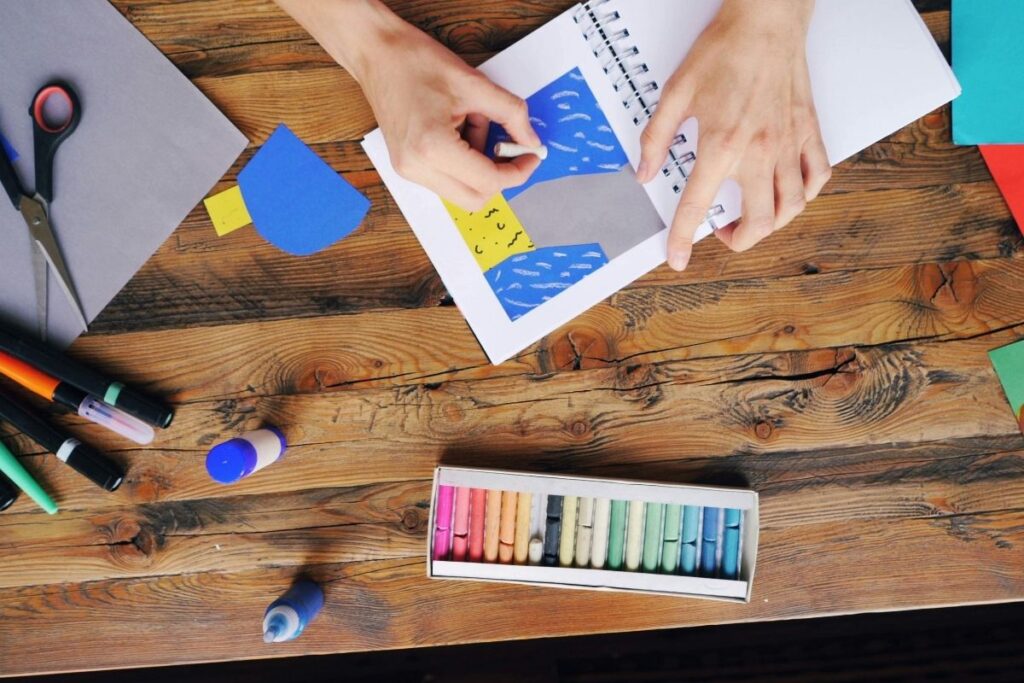
If your dining table has slowly become the default spot for fabric scraps, paint supplies, or half-finished scrapbook pages, a dedicated craft table is probably overdue. The right design depends heavily on what you’re actually making, since a sewing setup and a painting station need very different features.
This guide breaks down craft table ideas by hobby, so you can build something that actually fits how you work rather than a generic flat surface. You’ll also find a few features worth considering no matter which type of craft table you build.
Sewing and Fabric Craft Table Ideas

A sewing-focused table benefits most from a design that accommodates your machine and keeps fabric close at hand. A drop-in cutout for your sewing machine, set flush with the tabletop surface, keeps the bed of the machine level with your working area for smoother fabric feeding.
Adding a lower shelf or open cubbies sized for fabric bolts and bins keeps materials organized without cluttering the main surface. A tabletop around 48 to 60 inches wide gives enough room for both the machine and a cutting mat side by side.
Painting and Art Table Ideas
Painting tables take more abuse from spills and drips than almost any other craft surface, so material choice matters here more than in most other builds. A laminate or melamine top wipes clean easily and resists staining far better than raw wood.
Building in a lip or raised edge around the perimeter helps contain spills and stray supplies from rolling onto the floor. A shallow drawer or a row of small bins underneath keeps brushes, paint tubes, and palettes within easy reach while you work.
Paper Crafting and Scrapbooking Table Ideas
Paper crafts tend to require more flat surface area than other hobbies, since layouts, cutting, and drying pages all take up space at once. A larger tabletop, often 60 by 30 inches or more, gives enough room to spread out a full project without constantly shuffling supplies.
Flat, shallow drawers sized for 12 by 12 inch paper sheets keep your paper stock organized and easy to flip through. A pegboard or small shelf mounted above the table works well for ribbon, stamps, and other small embellishments that are easy to lose track of in a drawer.
Kids’ Craft Table Ideas
A craft table built for kids needs a lower height and a surface tough enough to handle markers, glue, and the occasional dropped scissors. A table height of about 20 to 22 inches, paired with correspondingly sized chairs, keeps the setup comfortable for younger builders.
A laminate or sealed wood surface stands up to spills and easy cleanup far better than an unfinished wood top. Rounded corners are worth adding to any kids’ table design as a simple safety improvement over sharp square edges.
Features Worth Adding to Any Craft Table
Regardless of the specific hobby, a few features tend to improve almost any craft table build. Locking wheels let you reposition the table easily while keeping it stable once you’ve settled into a spot.
An adjustable height mechanism accommodates both sitting and standing work sessions, which is especially useful for longer painting or cutting projects. Built-in outlets or a power strip mounted to the table’s underside also keep cords for irons, hot glue guns, or sewing machines from tangling across the work surface.
Tools and Materials for These Projects
Most of these builds share a similar core tool list, including a circular saw, a drill and driver, and clamps for assembly. The painting and kids’ table designs also call for a jigsaw if you’re rounding corners or cutting a curved edge.
Plywood, MDF, and laminate-topped particleboard all work well depending on the level of durability and cleanup you need. Budget for most of these projects to run between $60 and $200 depending on size, storage features, and finish material.
Frequently Asked Questions
What’s the best surface material for a painting table? Laminate or melamine surfaces hold up best against paint spills and stains, since they wipe clean without absorbing moisture like raw wood.
How tall should a kids’ craft table be? Most kids’ tables sit around 20 to 22 inches tall, paired with chairs sized to match for comfortable seating.
Do I need a special cutout for a sewing machine? A drop-in cutout isn’t strictly necessary, but it does help keep the machine bed level with your tabletop for smoother fabric handling.
How much space do I need for a paper crafting table? A tabletop of at least 60 by 30 inches gives enough room to spread out layouts and supplies without constant rearranging.
Is an adjustable height table worth building for crafts? It can be, especially for hobbies like painting or cutting that involve long stretches of standing work, since it lets you switch between sitting and standing as needed.
Final Thoughts
The right DIY craft table comes down to matching the design to your actual hobby, whether that means a machine cutout for sewing, a spill-proof surface for painting, or extra flat storage for paper crafts. Start with the features that solve your biggest daily frustration first.
Once you’ve built a table suited to how you actually work, you’ll likely find your craft sessions run more smoothly and your supplies stay far more organized.