
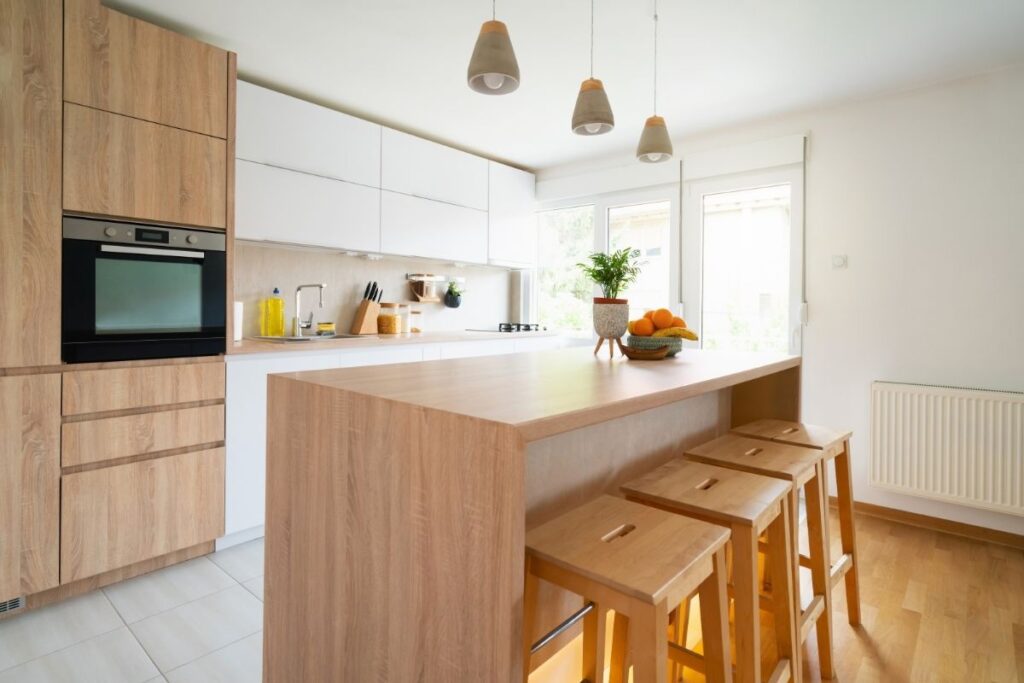
More meals happen at a kitchen table than almost anywhere else in the house, which makes it one of the hardest-working pieces of furniture you’ll ever build. Getting the shape and size right matters just as much as the wood you choose, especially in a kitchen where space is often tight.
This guide walks through kitchen table plans organized by shape, since that’s usually the first decision that depends on your actual kitchen layout. Each plan includes dimensions, materials, and an estimated cost so you can compare options before committing to a build.
Choosing a Kitchen Table Size for Your Space
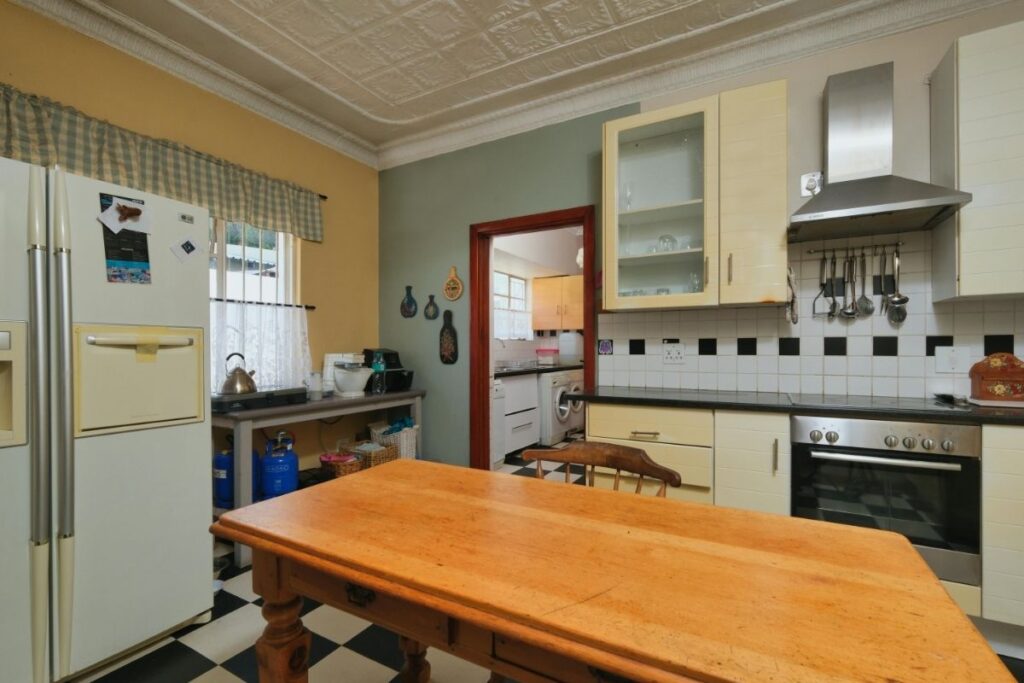
Before picking a shape, it helps to measure your kitchen and account for the space chairs need when pulled out. Leaving at least 36 inches of clearance around the table on all sides keeps the space usable and comfortable to move through.
Kitchen tables generally range from seating four people comfortably up to seating six or more, depending on the shape and dimensions you choose. Matching the table size to both your kitchen’s footprint and your household’s typical needs will save you from a build that feels either cramped or oversized.
Round Kitchen Table Plan
A round table works especially well in smaller or oddly shaped kitchens, since it avoids sharp corners that can catch on walkways. This plan uses a 42 inch diameter top on a simple pedestal base, comfortably seating four people.
Oak or maple both work well here, running $6 to $9 per board foot for a durable, everyday surface. This build rates as intermediate due to the pedestal base construction, takes about 10 to 12 hours, and typically costs $150 to $300 in materials.
Square Kitchen Table Plan
For very small kitchens or breakfast nooks, a square table keeps the footprint compact while still seating four. This plan uses a 36 by 36 inch top on a straightforward four-leg frame.
Pine or poplar keeps costs down for this smaller build, running $3 to $5 per board foot. This project rates as beginner-friendly, takes around 6 to 8 hours, and generally costs $80 to $150 in materials.
Rectangular Kitchen Table Plan
This is the standard choice for most households, offering the most seating flexibility for everyday family meals. This plan uses a 60 by 36 inch top, comfortably seating six people around a simple four-leg or trestle base.
Oak, maple, or a durable hardwood like acacia all suit this build well, generally running $6 to $9 per board foot. This project rates as intermediate, takes about 10 to 14 hours, and typically costs $200 to $400 in materials.
Drop-Leaf or Extendable Kitchen Table Plan
For kitchens that need to flex between everyday use and larger gatherings, a drop-leaf or extendable design offers the most versatility. This plan starts at a compact 36 by 36 inch size and extends to 36 by 60 inches with a hinged leaf or slide-out leaf mechanism.
Maple or birch plywood with hardwood edging works well here, running $4 to $7 per board foot depending on the finish material. This build rates as intermediate to advanced due to the hinge and support mechanism, takes 12 to 16 hours, and costs roughly $180 to $350 in materials.
Tools and Materials for These Builds
Across all four shapes, a circular saw or table saw handles your main cuts, and a pocket hole jig keeps the joinery strong and mostly hidden. A drill and driver set covers assembly, while the pedestal and drop-leaf designs also call for a jigsaw or band saw to cut curved or angled pieces.
Clamps are essential for holding tabletop boards flat and square while the glue cures, and a good square helps confirm your base stays true throughout assembly. Budget for sandpaper in a few grits and a food-safe finish as part of your material costs regardless of which shape you build.
Finishing a Kitchen Table for Daily Use
A kitchen table takes more daily wear than almost any other furniture piece, from hot dishes to spilled drinks, so the finish matters as much as the wood species. A food-safe, water-based polyurethane offers strong protection against both heat and moisture without leaving a strong odor once cured.
Apply at least two to three coats, sanding lightly between each for a smooth final surface. Plan on refreshing the finish every few years in high-use households, since daily wear will eventually dull even a well-applied topcoat.
Frequently Asked Questions
What is the best shape for a small kitchen table? A square or round table generally fits better in tight kitchens, since both shapes avoid the extra length a rectangular table requires.
How much clearance do I need around a kitchen table? Leave at least 36 inches around the table on all sides to give chairs enough room to pull out comfortably.
What wood is best for a kitchen table? Oak and maple are popular choices for their durability against daily wear, though pine works well for smaller, lower-traffic builds on a tighter budget.
Is a drop-leaf table hard to build? It’s more involved than a fixed table due to the hinge and support mechanism, generally rating as an intermediate to advanced project.
What finish is safest for a kitchen table? A food-safe, water-based polyurethane is a common choice, offering solid protection against heat and moisture without a strong lingering odor.
Final Thoughts
Choosing the right kitchen table shape starts with an honest look at your available space and how many people you typically need to seat. From there, matching your wood choice and finish to the daily demands of kitchen use will keep the table looking good for years.
Whichever plan you choose, take the time to get the clearance and proportions right before you start cutting, since that’s what will make the finished table feel right in your kitchen.