
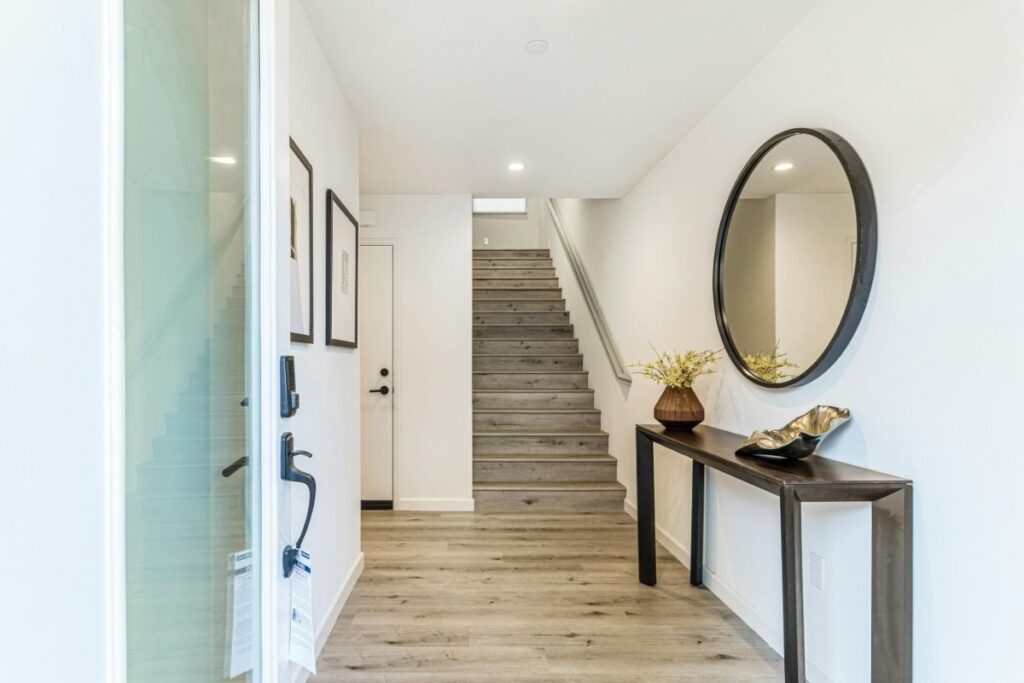
Every guest’s first real impression of your home happens in that small stretch of space by the front door. An entryway table does a lot of work in that spot, whether it’s catching keys and mail or simply giving the area a finished, welcoming feel.
The right idea depends heavily on what your entryway actually looks like, since a sprawling foyer and a narrow apartment hallway call for very different solutions. This guide breaks down entryway table ideas by the specific challenge they solve, so you can find one that actually fits your space.
Entryway Table Ideas for Narrow Spaces
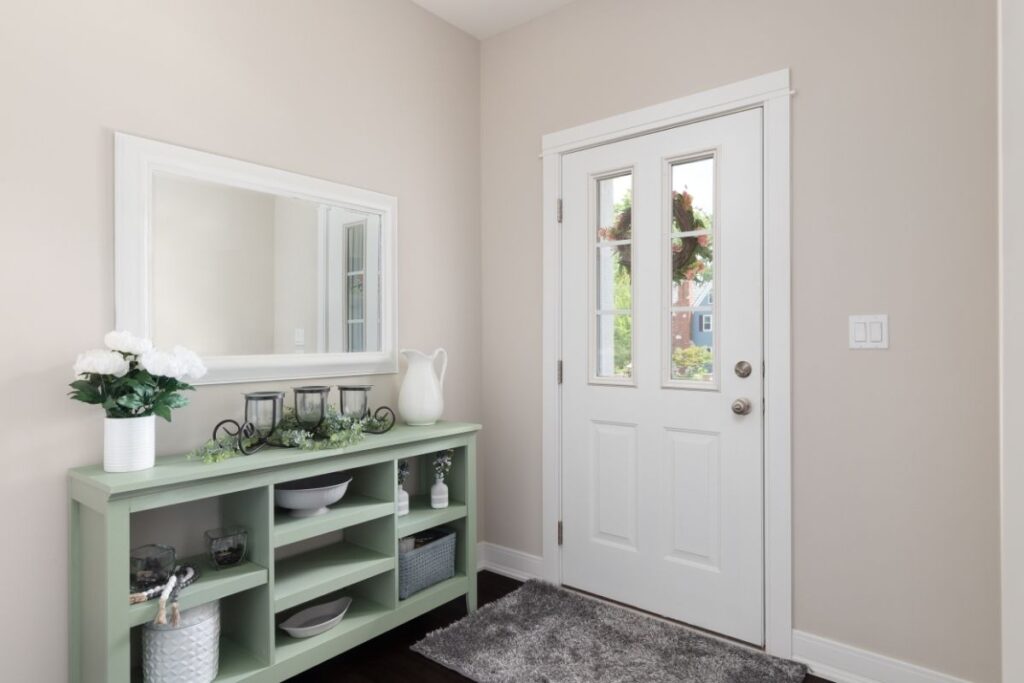
Console tables follow a narrower set of sizing rules than most other furniture pieces, mainly because they’re built to fit against a wall or the back of a sofa. Knowing these standards ahead of time makes planning any of the plans below much easier.
Most console tables measure between 12 and 18 inches deep, keeping the profile slim enough to avoid blocking a walkway. Height typically falls between 30 and 36 inches, though tables meant to sit behind a sofa should match or slightly exceed the sofa’s back height, usually around 34 to 36 inches.
Entryway Console Table Plan
An entryway console needs to handle daily use, from dropping keys to holding a small tray for mail. This plan uses a 36 inch wide, 14 inch deep tabletop with a single lower shelf for baskets or shoes.
Pine or poplar works well here, running about $3 to $5 per board foot, since the piece sees moderate rather than heavy wear. This build rates as beginner-friendly, takes around 6 to 8 hours, and typically costs $80 to $150 in materials.
Behind-the-Sofa Console Table Plan
This plan is built specifically to match sofa height, making it useful as extra surface space in an open floor plan. The design uses a 48 inch long, 14 inch deep top set at 35 inches tall, just above a standard sofa back.
Poplar or oak both work well for this build, with oak running $5 to $8 per board foot for a sturdier, more furniture-grade feel. This project rates as beginner to intermediate, takes roughly 8 to 10 hours, and costs around $100 to $200 in materials.
Narrow Hallway Console Table Plan
For tight hallways, this plan trims the depth down to just 10 to 12 inches while keeping a standard 30 inch height. A simple two-leg or wall-mounted bracket design keeps the footprint minimal without sacrificing stability.
Plywood with a hardwood edge banding keeps costs low while still looking finished, generally running $2 to $4 per board foot for the plywood itself. This is a beginner-level project, taking about 4 to 6 hours, with materials typically costing $50 to $100.
TV and Media Console Table Plan
This plan takes a wider, sturdier approach suited to holding a TV and media components. The design uses a 60 inch wide, 16 inch deep top with a lower shelf or cabinet section for equipment storage.
Plywood or MDF with a veneer finish is common here, running $3 to $6 per board foot, since the larger surface area can get expensive in solid hardwood. This build rates as intermediate, takes 10 to 14 hours, and typically costs $150 to $300 in materials.
Tools and Hardware for These Builds
Across all four plans, a circular saw or table saw handles your main cuts, while a pocket hole jig keeps joints strong and hidden. A drill and driver set covers assembly, and clamps help hold pieces steady while glue sets.
For the entryway and TV console plans, which include shelving, you’ll also want shelf pin hardware or simple cleats to support the lower surface. Standard wood screws work fine for most of these builds, though exterior-rated screws are worth using if the table will sit near an entryway exposed to outdoor humidity.
Finishing Tips for a Polished Look
Sanding through progressively finer grits, ending around 220, gives any of these plans a smooth, professional-feeling surface before staining. Two coats of a wipe-on poly or wood stain typically provide enough protection for indoor use, with light sanding between coats for the best result.
If your console table sits near a frequently used entryway, consider a slightly more durable finish, like a water-based polyurethane, to handle daily bumps and moisture from wet shoes or umbrellas. Reapplying a fresh coat every few years keeps high-traffic pieces looking new.
Frequently Asked Questions
How deep should a console table be? Most console tables measure between 12 and 18 inches deep, with narrower hallway designs sometimes trimmed down to 10 inches.
What height should a console table be behind a sofa? Aim for 34 to 36 inches, which matches or slightly exceeds the back height of most standard sofas.
What’s the cheapest material for a DIY console table? Plywood with hardwood edge banding is typically the most affordable option while still giving a finished, furniture-quality appearance.
Can a console table double as a TV stand? Yes, a wider and slightly deeper console table plan, generally 60 inches wide and 16 inches deep, works well for holding a TV and media components.
How long does it take to build a DIY console table? Simpler entryway or hallway designs take about 4 to 8 hours, while larger TV console builds can take 10 to 14 hours depending on added shelving or cabinet features.
Final Thoughts
A well-planned console table fills awkward wall space with something genuinely useful, whether that’s storage by the front door or extra surface area behind your sofa. Match the plan to your specific spot, keep the standard depth and height guidelines in mind, and the build itself stays fairly straightforward.
Once it’s finished, a simple finish and occasional touch-up will keep it looking sharp for years of daily use.